Improve public visitor information
Ask whether published hours, public directions, and accessibility contacts answered visitors’ routine questions. Do not solicit screening procedures or access-control details.

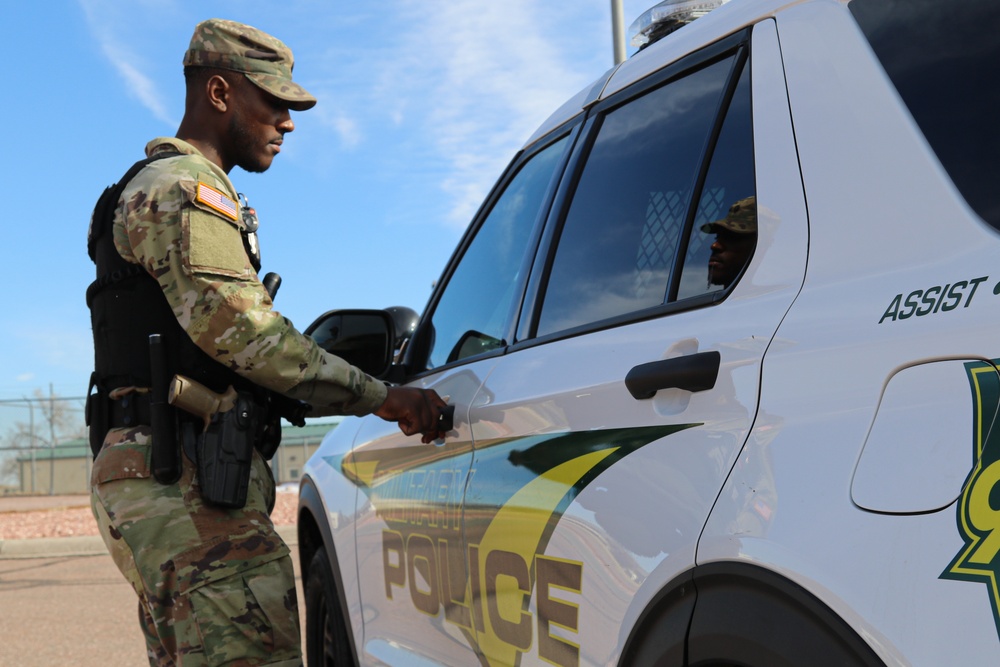
Military Police
Check whether newcomers and visitors understood installation guidance and knew where to get help. Use the feedback to improve the next briefing or handout without collecting operational information.
Which public resource was hardest to find before your first visit?
Example survey questionWhere to start
Ask whether published hours, public directions, and accessibility contacts answered visitors’ routine questions. Do not solicit screening procedures or access-control details.
Find out which public resources families were able to locate after the briefing and what would have helped them before arriving.
After a non-sensitive public communications session, ask which examples staff could use right away. Keep operational exercises and performance records out of the survey.
Survey templates
Preview the questions here. In the builder, choose your response formats and adjust the wording for your audience.
Field guide
Try a short survey after a publicly announced installation orientation. Ask whether families could identify the right public information office, find an accessible copy of the materials, and understand common abbreviations. If participants say they had to ask around for office hours, verify the hours and improve the public resource families are already using.
Distribute the survey through the public or installation-approved channel used for the event. Use one link for the announced audience and make clear that the form is optional. Do not ask for unit, rank, sponsor, duty location, or details about any installation access process.
An installation might run a public bicycle safety session and an internal plain-language training for staff. Families can tell you whether the handout made sense or whether another time would work better. Staff can report which example helped them explain a routine public service. Neither group needs to evaluate how the other operates.
Label each survey with its purpose and audience. If you revisit both topics next quarter, keep the core questions consistent and leave room for a new item tied to a change you actually made. Compare response patterns separately rather than pooling staff and family answers.
Have the appropriate installation staff review the survey purpose, platform, distribution, and plan for handling answers before publishing. Focus on public communications, accessibility, and customer service. Never invite respondents to report security weaknesses, operational practices, exercise details, or information tied to individual personnel.
Review comments before sharing findings. Remove responses from a summary if the text contains operational or identifying details and follow local handling guidance. Report what changed in ordinary terms, such as publishing a larger-print guide, without sharing underlying comments or drawing conclusions about personnel performance.
Choose a plan, then use Officer Survey to write, share, and review your own survey.
Practical guidance
No. Use these examples for general visitor experience, public information, and non-sensitive training feedback. Use approved systems for operational reporting and incident records.
Yes. Build a survey and share its link or QR code in an approved public-facing channel. Confirm local publication and data-handling approval first.
Do not collect operational details, mission or deployment information, personal identifiers, personnel records, or descriptions of access-control weaknesses.