Evaluate training across offices
Use common questions across course deliveries to compare clarity, pacing and relevance. Give the instructors room to ask about barriers to applying the material.

State and Federal Law Enforcement
Find out which parts of training translate to the job and where partners need clearer guidance. Use routine feedback to improve the next class or outreach effort without collecting case or operational details.
Which part of the workshop would be hardest to put into practice at your office?
Example survey questionWhere to start
Use common questions across course deliveries to compare clarity, pacing and relevance. Give the instructors room to ask about barriers to applying the material.
Ask attendees whether a webinar or consumer education handout explained where to get further help. Edit the public guidance before distributing it more widely.
Ask partners about routine administrative coordination or the usefulness of a workshop. Keep the activity separate from sharing investigative information.
Survey templates
Preview the questions here. In the builder, choose your response formats and adjust the wording for your audience.
Field guide
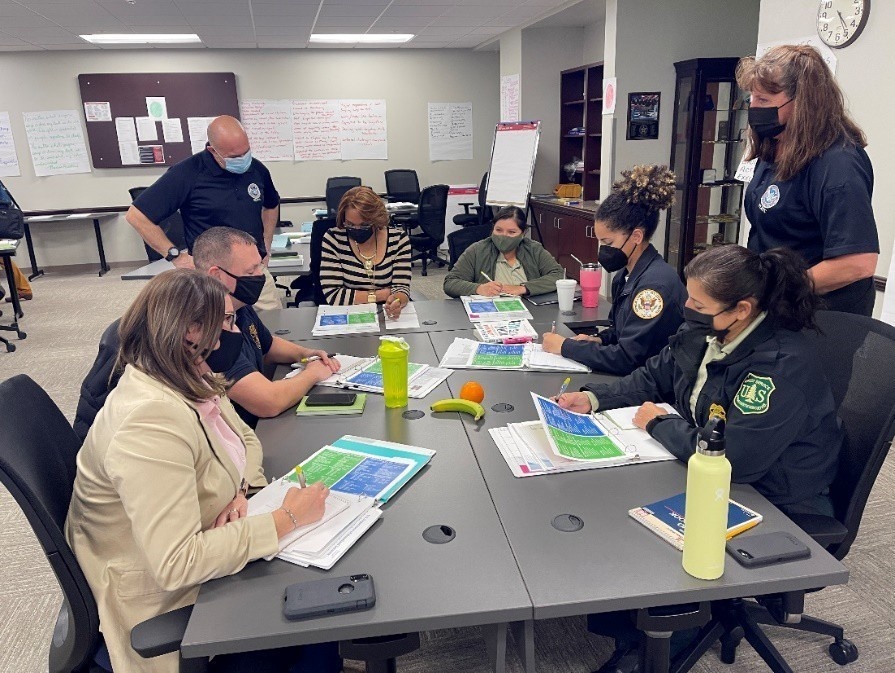
Ask course participants about the same core topics wherever training is delivered: whether the objectives were clear, whether there was enough practice and which material they expect to use. Let each instructor add one question about the day’s exercises. A follow-up a few weeks later can ask what participants actually used and whether time, reference materials or another barrier kept them from applying it.
Suppose several classes find the course relevant but a follow-up shows few participants can find the reference guide. Updating the guide and telling people where to find it may be more useful than changing the course itself. Compare patterns across deliveries, and treat results from a small class as a starting point for discussion rather than a verdict on its instructor.
For a fraud prevention webinar or public resource page, ask participants to name one action they would take if they needed help. Give them an approved link at the end of the event, and let them answer before they leave. If people keep naming the presentation host instead of the intended public assistance channel, make that direction more prominent in the handout and repeat the question at the next session.
If you compare different sessions, write down who received the survey and how. A live event survey and an emailed follow-up may reach very different groups, even if the questions match.
Use a separate survey for organizations that attend regional workshops or coordination meetings. Ask whether routine administrative responsibilities are understood, whether reference materials are easy to find and whether next steps are clear. Do not ask partners to describe ongoing investigations, sensitive assignments or restricted systems. Before distributing the link, follow the agency’s review process for the wording, recipients and data handling.
Give respondents a clear way to route a question that belongs in an existing agency process instead.
Choose a plan, then use Officer Survey to write, share, and review your own survey.
Practical guidance
Keep questions, wording and response scales consistent where you need a comparison. Treat small or self-selected samples as feedback about those respondents rather than proof of how an entire office feels.
Yes. A later survey can ask what participants used, what stopped them and what refresher would help. Keep those questions about general practice rather than case examples or sensitive assignments.
No. Use agency-approved systems for investigative records and operational reporting. Have the appropriate agency reviewer approve survey content, audience and data handling before sharing it.